
Why the October 2026 rank-tracking disruptions matter more than you might think.
By Justin Crawmer | October 2026
Something significant has been happening in the SEO industry over the past several weeks.
And unless you’re closely involved in search marketing, you probably haven’t heard much about it.
Google has been making it increasingly difficult for third-party software to access and collect search ranking data.
For years, SEO professionals have depended on tools like Semrush, Ahrefs, and other ranking platforms to monitor keyword positions, evaluate competitors, and report progress.
Now, some of those tools are struggling to provide the same level of consistency.
Barry Schwartz recently covered the issue in Search Engine Roundtable, documenting how Google’s efforts to restrict automated collection of search results have disrupted third-party tracking.
Source: Search Engine Roundtable — Third-Party Google Rank Tracking Struggling Now, October 12, 2026. Search Engine Roundtable
To be clear, ranking tools haven’t universally stopped working.
But Google has made the process of obtaining this information more difficult, and different platforms are experiencing different levels of disruption.
For an industry that has spent decades relying on ranking reports, that’s a pretty big deal.
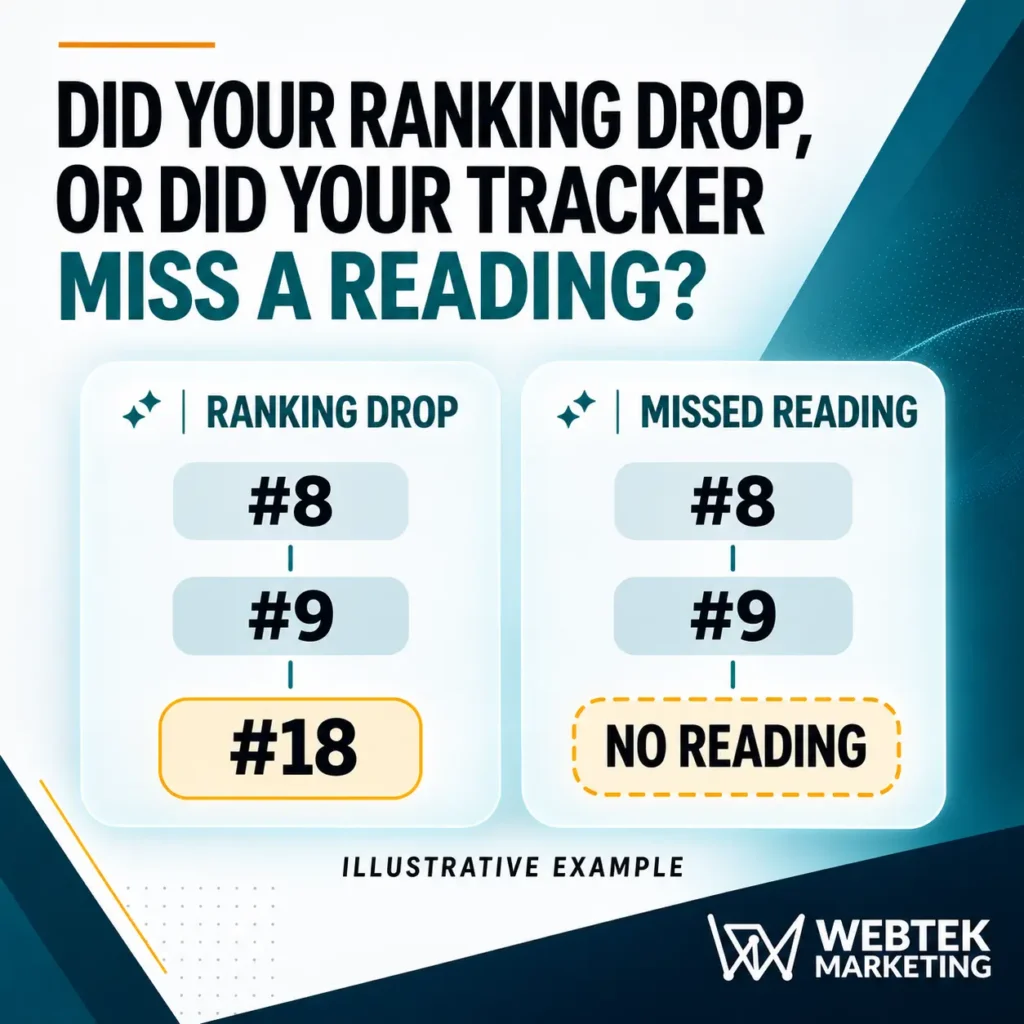
Why Keyword Rankings Have Always Mattered
Let’s say you’re a business owner paying an SEO agency to improve your visibility for a particular search phrase.
Maybe you want your company to appear when someone searches for a specific service in your city.
Historically, your agency could track your position for that keyword every month.
Perhaps you started at position 75.
Then moved to position 40.
Then position 22.
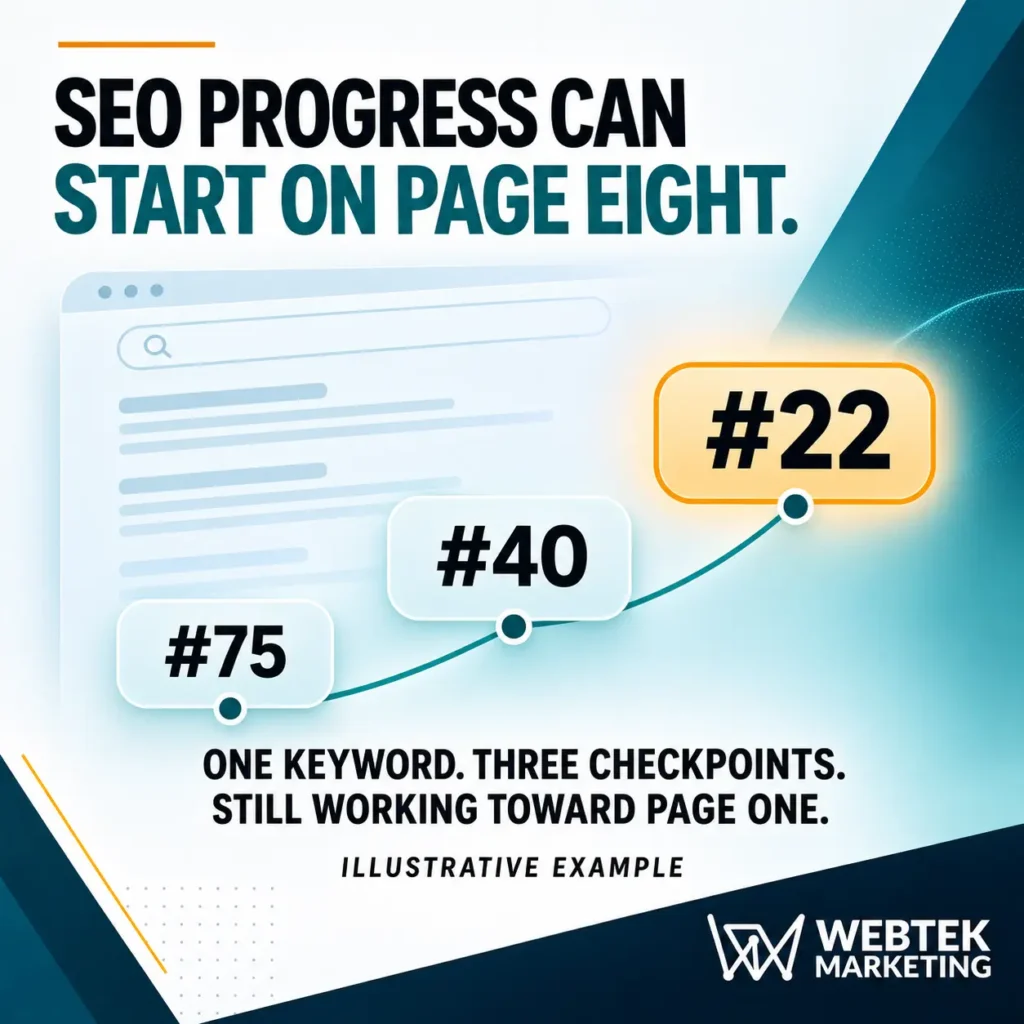
Eventually, you might reach the first page.
Throughout that process, your agency could demonstrate measurable progress.
Even when you weren’t receiving meaningful traffic yet, we could show that your website was moving in the right direction.
And that was valuable.
Because SEO often requires months of work before improvements begin generating significant leads or revenue.
Ranking data helped bridge that gap.
What’s Actually Changing?
Google has been taking several steps to make automated search-result collection more difficult.
Some of these measures involve bot detection and restrictions on scraping. Others involve changes to how search results are delivered.
In September 2025, Google also stopped supporting the num=100 parameter, which had allowed tools to request larger sets of search results through a single query.
More recently, Google has experimented with redirects and other mechanisms that complicate automated tracking.
The result?
Different SEO platforms may report different ranking movements.
Some may collect data less frequently.
Others may struggle to capture results beyond the first few pages.
And when you’re comparing historical ranking reports, these inconsistencies can create real confusion.
It’s worth noting that Google hasn’t necessarily targeted SEO reporting tools specifically. Some measures may be aimed at broader automated scraping, including AI-related data collection.
But regardless of the motivation, SEO professionals are dealing with the consequences.
Can’t We Just Use Google Search Console?
That’s probably the first question business owners will ask.
And it’s a reasonable one.
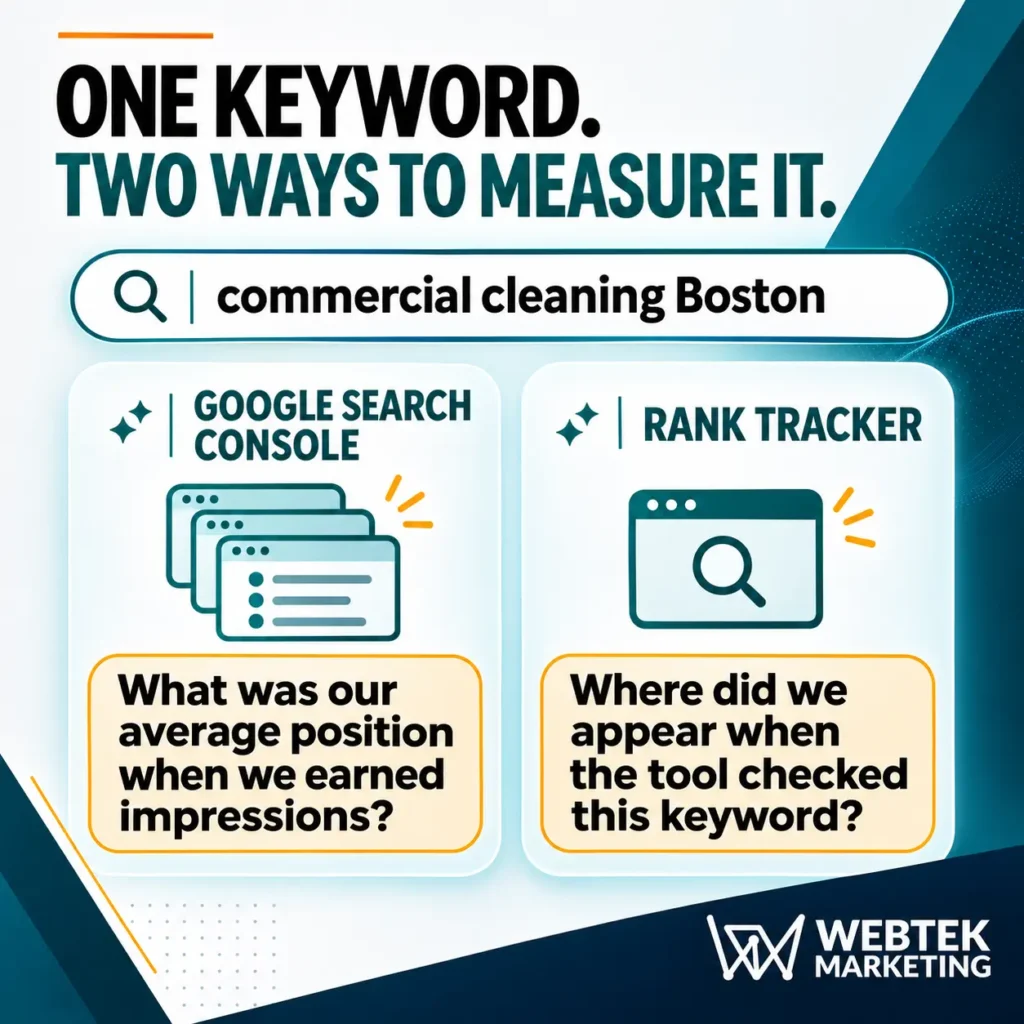
Google Search Console provides valuable information about the search queries associated with a website’s impressions and clicks.
It also provides average ranking positions.
In fact, it’s one of the most important tools we use.
But there’s a fundamental difference between Search Console and traditional rank-tracking software.
Search Console primarily shows how your website has performed in actual Google searches.
Traditional ranking platforms can monitor specific keywords, including ones where your website isn’t currently generating meaningful visibility.
That’s an important distinction.
For example, if we’re working to improve rankings for a keyword where your website currently sits far beyond the first page, we may have limited visibility into that progress through Search Console.
Google also reports average positions rather than a fixed ranking for every possible user, location, and search context.
Source: Google Search Console — Understanding Impressions, Positions, and Clicks. Google Help
Search Console is extremely useful.
But it doesn’t replace every function that traditional ranking platforms provide.
The Bigger Problem: We’re Losing Measurement Clarity at the Worst Possible Time
Here’s why I find this development particularly concerning.
SEO reporting was already becoming more complicated.
AI Overviews are reducing the number of searches that result in clicks.
Google’s AI Mode is introducing an entirely different search experience.
And platforms like ChatGPT are creating additional pathways through which people discover businesses.
Now, at precisely the moment when we need better visibility into what’s happening, the reliability of some traditional measurement tools is being challenged.
Think about what that means for a business owner.
Your organic traffic might be declining because of zero-click search.
Your keyword ranking reports might suddenly become inconsistent because of third-party data collection issues.
And your customers might increasingly be discovering your business through platforms that don’t provide traditional SEO analytics.
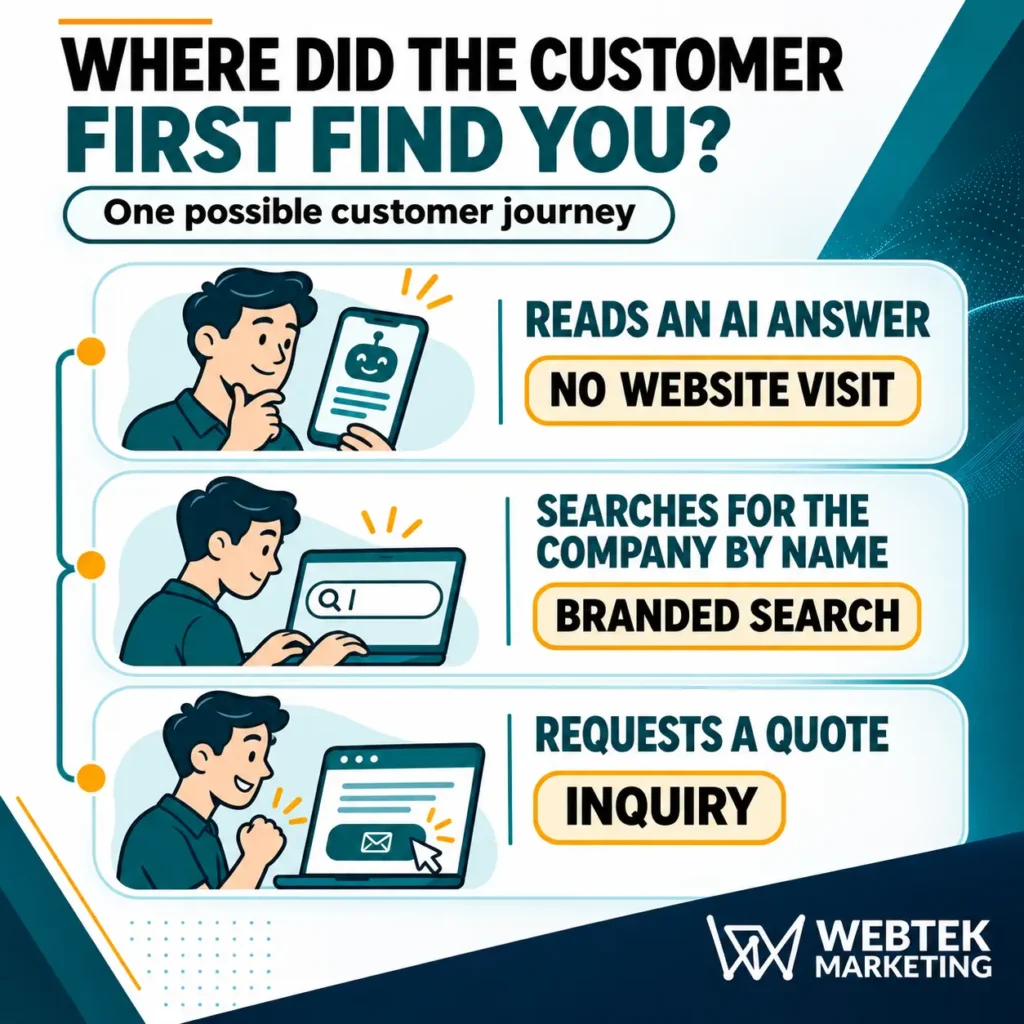
How are you supposed to evaluate whether your search marketing investment is working?
That’s the question agencies need to be prepared to answer.
My Take: Rankings Still Matter, But They Were Never the Final Goal
I don’t believe we should abandon keyword tracking.
As long as rankings influence visibility, they’re going to matter.
But I do think this is forcing our industry to confront something we’ve known for a long time.
Rankings were always a means to an end.
The ultimate objective was never simply to get a website into position three for a particular keyword.
It was to connect businesses with potential customers.
And hopefully turn those connections into revenue.
So rather than becoming overly dependent on any single ranking tool, we need to combine multiple sources of evidence.
We can still examine Search Console performance, organic traffic, keyword visibility, landing-page engagement, and conversion data.
But we also need to examine AI search visibility, branded searches, lead quality, and broader business outcomes.
And when tracking platforms produce inconsistent information, agencies should be transparent about those limitations.
That’s particularly important now.
Because business owners deserve to understand when a reporting change reflects an actual performance problem and when it may simply reflect a change in how data is being collected.
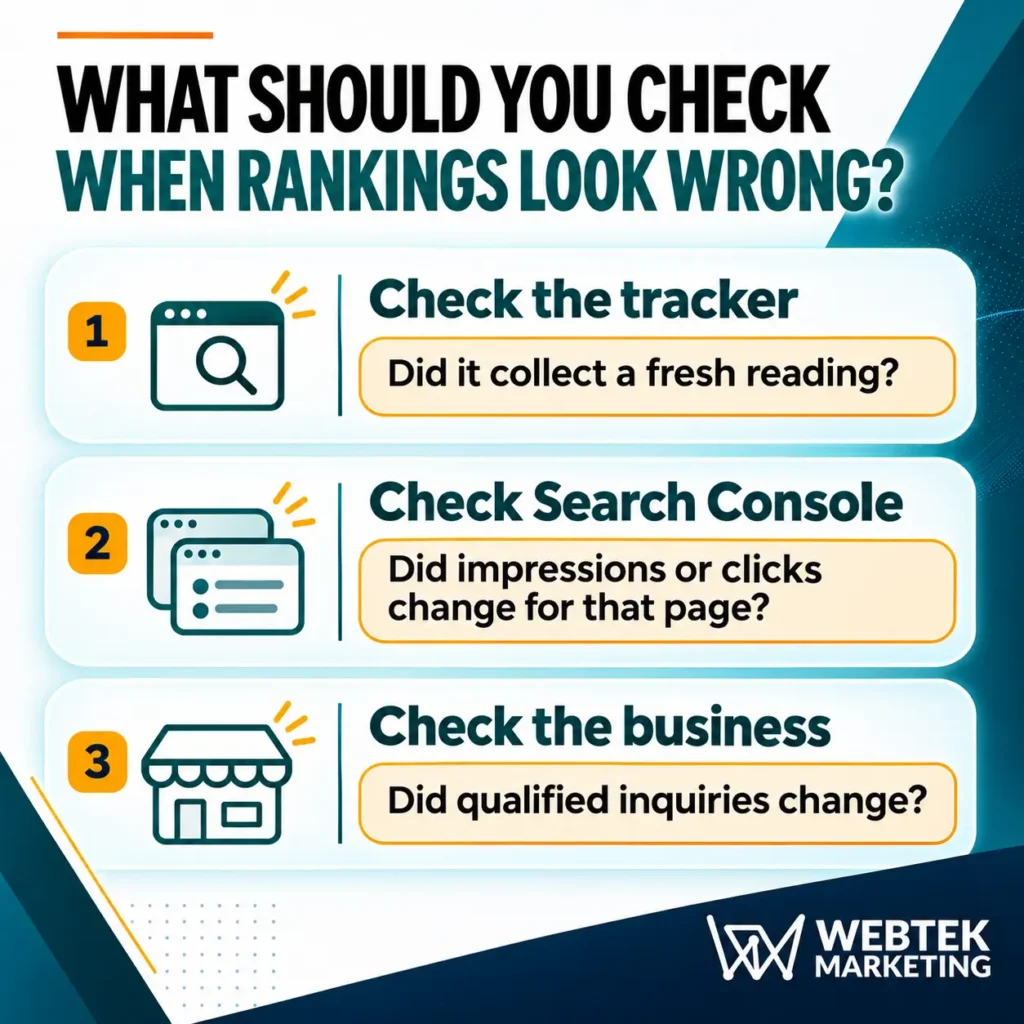
I think the October 2026 disruptions are a reminder that the reporting infrastructure we’ve relied on for years isn’t guaranteed to remain unchanged.
We need to adapt.
Not by abandoning measurement, but by making it more comprehensive.
The future of SEO reporting can’t depend on one platform, one ranking number, or one traffic channel.
It needs to reflect the much more complicated reality of how people discover businesses today.
And frankly, I think that’s where our industry should have been heading all along.